
RDEL #123: How differently do software developers perceive the same communication?
Study identifies systematic perception gaps affecting two-thirds of software project communication, regardless of developer experience or background
Welcome back to Research-Driven Engineering Leadership. Each week, we pose an interesting topic in engineering leadership and apply the latest research in the field to drive to an answer.
Every engineering leader has witnessed it: a message intended as neutral feedback lands as harsh criticism, or an encouraging comment gets dismissed as unprofessional. These miscommunications aren’t just awkward—they can derail team dynamics and project success. This week we ask: How differently do software developers perceive the same communication, and what does this mean for team collaboration?
The context
Software development thrives on collaboration, making communication critical to project success. Encouraging statements boost team motivation and productivity, while perceived negativity can lead to decreased performance and even burnout. The challenge: developers come from diverse backgrounds, and what one views as helpful and professional, another might perceive as dismissive or inappropriate.
Most developers aren’t aware that colleagues might interpret their messages completely differently than intended. Research on async communication shows communication patterns significantly impact outcomes—but what about how individuals perceive the same message? For example, when someone writes “lol” after solving a bug, some see positivity while others see unprofessionalism. These misalignments compound over time and create friction that can be extremely difficult to resolve if not identified early.
The research
Researchers at Leibniz University Hannover conducted a hierarchical cluster analysis on 94 software developers with varying levels of experience and skills, examining how they perceived 96 statements from real software project communication on platforms like Stack Overflow and GitHub.
Key Findings:
Two distinct perception groups emerged: Using cluster analysis, researchers identified two groups of developers (78 and 16 participants respectively) whose perceptions differed significantly for about 65% of statements.
Note: Researchers call out that due to low sample size, this data indicates that there are at least two groups of developers whose perceptions differ, but potentially more.
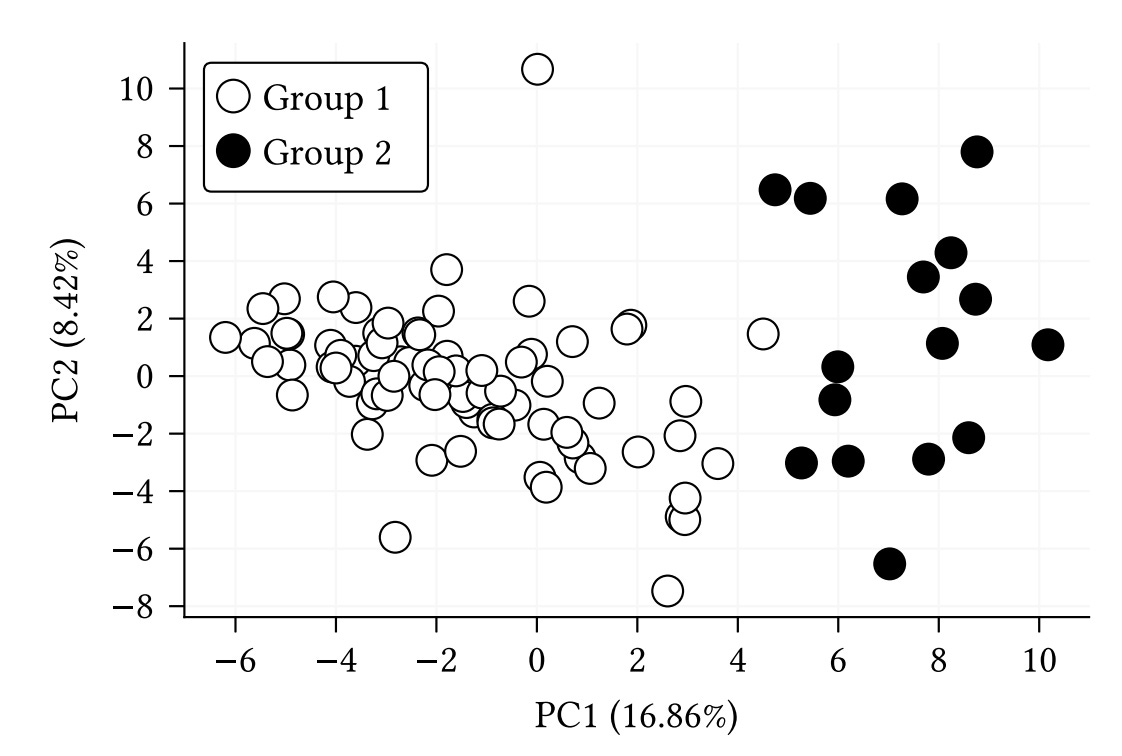
Scatter plot of participants across the first two principal components, colored by our clustering results
Just five statements predict group membership: Despite differences across 62 statements, a logistic regression model using only 5 polarizing statements could assign each developer to their correct perception group with 100% accuracy.
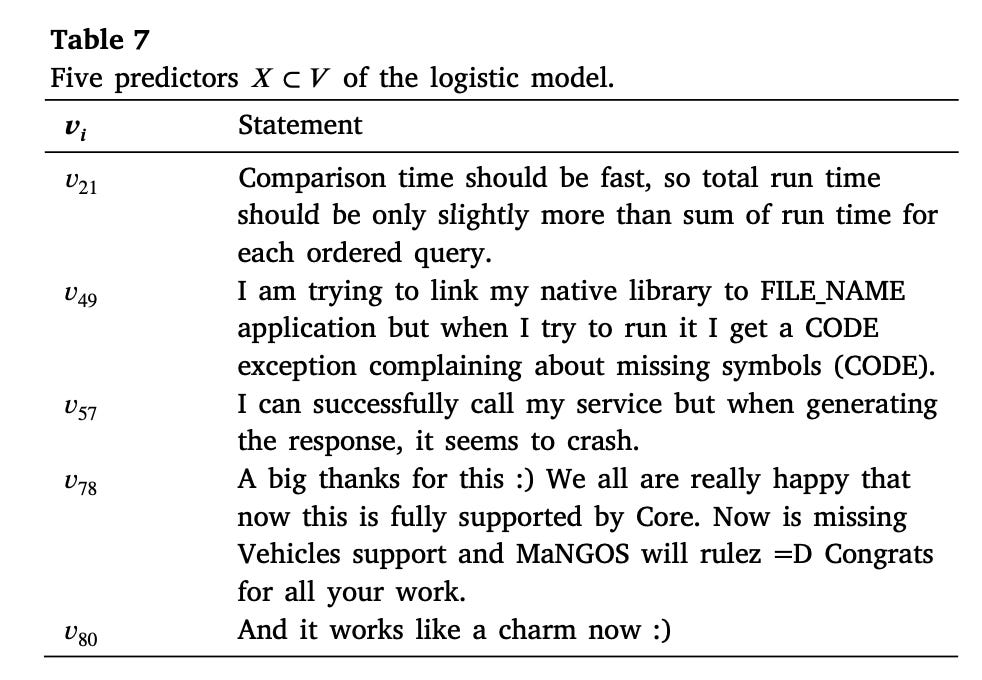
The five statements that could assign a developer to the correct perception group Demographics don’t explain the differences, but perception of tone might: No significant differences in age, experience, gender, or programming skills existed between groups. The only significant difference was that one group perceived significantly more statements as neutral (52.2% vs 41.6%) while the other perceived more as positive (36.3% vs 26.0%).
The perception gap is about professionalism vs. emotional resonance: Free-text responses revealed that one group annotated based on “emotional resonance”, and viewed emoticons and casual language positively. The other group focused on “helpfulness, informativity, and meaningfulness,” perceiving casual responses as negative in professional settings.
Internal consistency is high within groups: Each group showed “good to excellent” internal consistency (Cronbach’s α of 0.86-0.91), meaning individuals within each group perceive communication through a shared lens, even though that lens differs dramatically between groups.
The application
This research reveals that communication perception differences among developers aren’t random—they can be systematic and predictable. About two-thirds of messages in software projects risk being perceived differently than intended, potentially eroding developer productivity through misunderstandings, rework, and damaged team trust.
Engineering leaders can address this by:
Protect focus time by matching communication style to interruption cost: For high-stakes communications that justify breaking flow (architectural decisions, blocking issues, critical feedback), use information-dense, formal language that minimizes back-and-forth clarification. For lower-priority updates, explicitly signal tone and urgency (e.g., “Quick win:” or “FYI, non-blocking:”) so developers can triage effectively without emotional friction derailing their productivity.
Accelerate PR cycles through perception-aware feedback: Since five statements predict perception groups, coach developers to adapt code review styles based on their audience. Terse technical feedback that one developer finds efficient might require another to context-switch repeatedly for clarification. Overly casual praise might distract rather than motivate. Help reviewers recognize when their default style might create productivity friction.
Try an exercise to identify potential misaligned communication norms: Have your team complete a quick exercise rating sample messages (including casual ones with emojis and formal technical ones) as positive, neutral, or negative. Share results anonymously to reveal perception gaps that currently slow down collaboration, then establish norms that acknowledge both styles. Teams waste significant cycles resolving conflicts that stem from perception differences, not actual disagreements.
—
Thats all for this week - happy research tuesday!
Lizzie